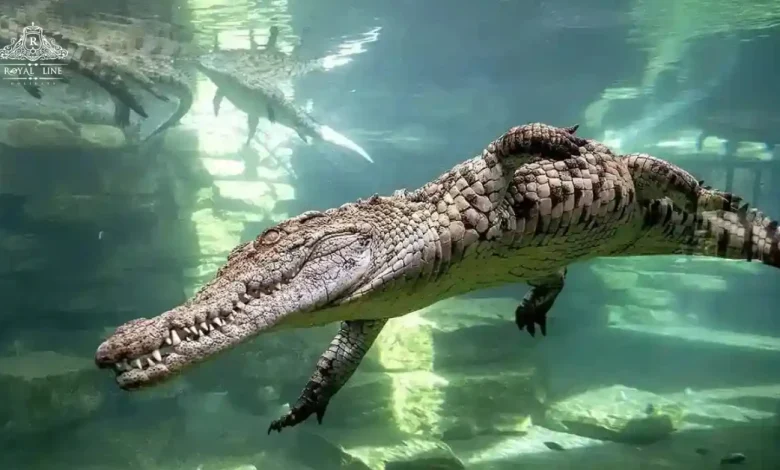
Dubai Crocodile Park: Tickets & All You Need to Know
Dubai Crocodile Park brings the ancient lineage of the Nile crocodile into sharp, contemporary focus through a thoughtfully designed complex that blends habitat design, live animal observation, and hands-on learning. Spanning 20,000 square meters of land and water and home to more than 250 Nile crocodiles, the park places equal emphasis on animal welfare and visitor education. From a specialized Crocodile Aquarium that reveals amphibious behaviors to a dedicated Crocodile Museum that explores the species’ evolution and stunning adaptations, the site offers an immersive, full-circle experience. Whether you are a family planning a day out, a wildlife enthusiast eager to study these reptiles up close, or a traveler looking for a distinctive attraction with real educational value, this guide brings together everything you need to know about tickets, hours, programs, and practical planning—directly from the available details.
At a Glance: Key Facts, Times, and Ticket Rules
| Attraction | Dubai Crocodile Park |
| Site size | 20,000 sqm (land and water) |
| Animals | More than 250 Nile crocodiles, including specimens measuring 5 meters |
| Core features | Crocodile Aquarium; Crocodile Museum; multi-viewpoint habitats with lakes, waterfalls, islands, and sandbanks |
| Operating hours | 10:00 am to 8:00 pm |
| Baby Crocodile Encounter | Every day at 11:30 am and 04:30 pm |
| Crocodile Feeding Show | Friday, Saturday, Sunday at 04:00 pm |
| Ticket price shown | $17.50 |
| Language | English |
| Meeting point | Open in Google Map |
| People of Determination | Free admission with valid ID proof |
| Ticket validity | Single use; not refundable or exchangeable; lost/damaged/stolen tickets cannot be replaced, refunded, or exchanged |
| Transfers policy (if applicable) | No eating, drinking, or smoking inside vehicles on any tour that includes transfer services |
| Seasonal offer | Summer Kids Go Free: One child (ages 3–11) free with each paid adult ticket; valid 1 July 2025–31 August 2025; applies to entry tickets only (not F&B) |
| Booking | royallineholidays.com |
What Makes Dubai Crocodile Park Exceptional
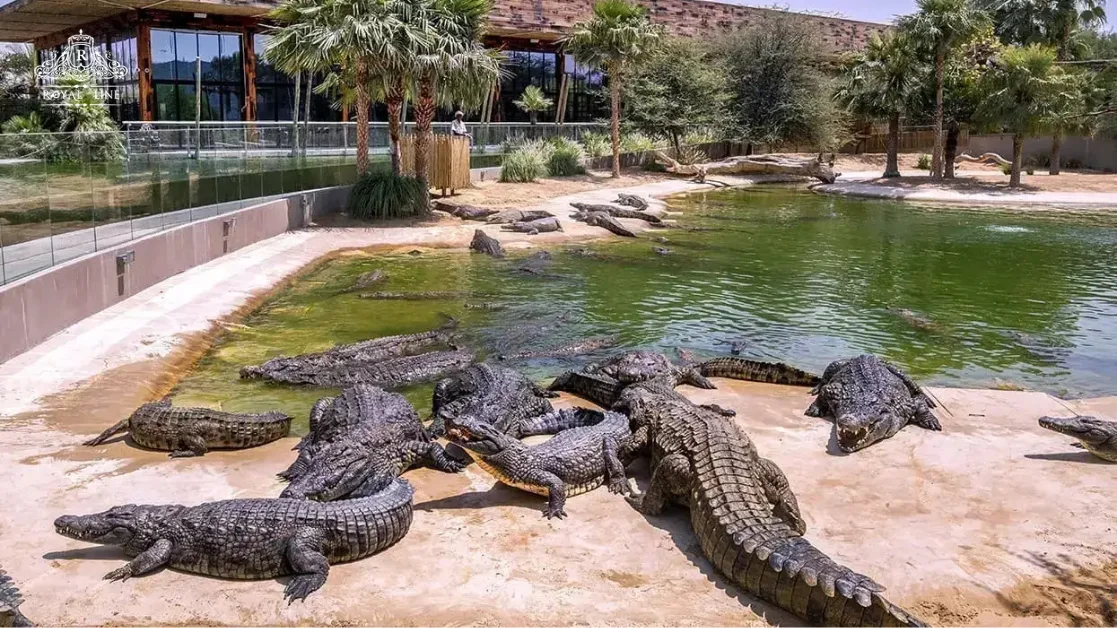
Dubai Crocodile Park distinguishes itself by approaching wildlife viewing as an entire learning journey rather than a single look-and-move-on exhibit. The cornerstone of that philosophy is the park’s careful habitat design: an exhibition space that simulates the natural environments in which Nile crocodiles thrive, featuring lakes, waterfalls, islands, and sandbanks. These elements are not simply aesthetic; they are practical components that support the crocodiles’ needs and display behaviors visitors seldom see elsewhere. The result is a venue where you can witness the rhythms of crocodile life unfold from multiple vantage points and with an unusual degree of clarity. This approach is amplified by the presence of a full museum and a specialized aquarium dedicated to the same subject, inviting you to understand what you are seeing through the lens of science and natural history.
The park’s investment in education is equally evident in its guided offerings, delivered by experienced educators. These sessions aim to enrich understanding of the Nile crocodile’s life and history and to spotlight ongoing conservation efforts. Combined with scheduled encounters and feeding times, the park effectively bridges the gap between curiosity and comprehension, providing structured opportunities to engage and learn. This synthesis of habitat realism, institutionalized learning, and programmatic events is what sets the park apart, making it a rare example of wildlife tourism that is carefully aligned with awareness-building and respect for the animals on display.
Immersive Habitats: Lakes, Waterfalls, Islands, and Sandbanks
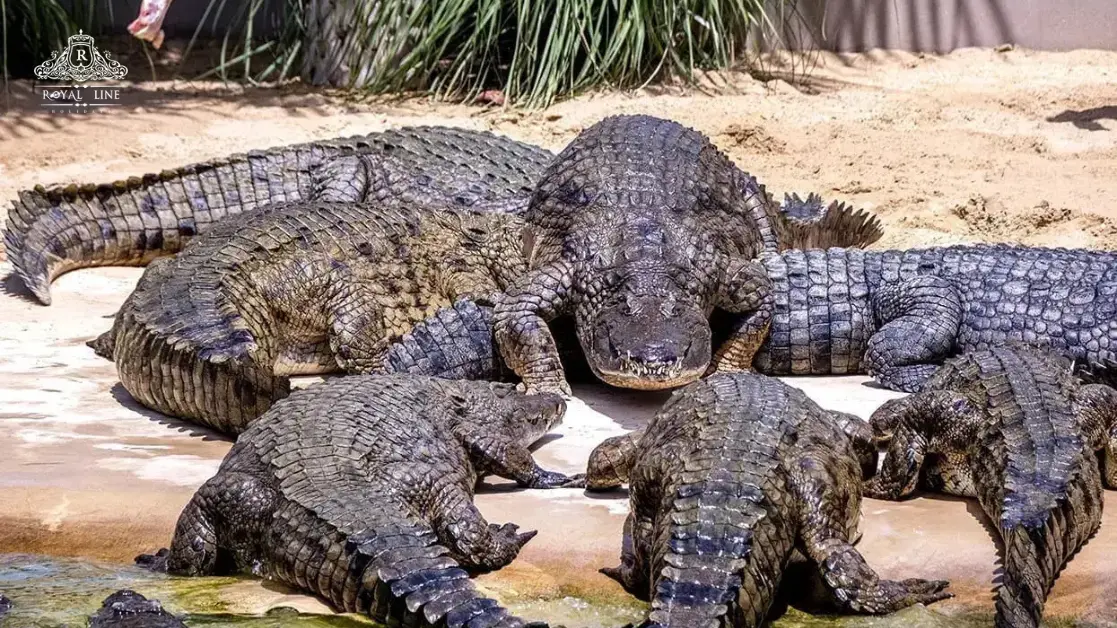
At the heart of the visitor experience is a habitat complex designed to echo authentic crocodile environments, complete with lakes, flowing water features, secluded islands, and expanses of sand. The interplay of these elements gives crocodiles the spatial variety necessary to express a range of behaviors—from basking and stealthy submersion to territorial dynamics—within a setting optimized for visitor observation. As you move through the park, you will encounter multiple points from which to watch, each offering a different line of sight or depth of field. This emphasis on varied viewpoints is more than scenic; it increases your chances of seeing nuanced behaviors, such as how a crocodile’s body language shifts between land and water or how its positioning changes in response to currents and terrain.
For guests, these layered habitats also shape the pace of the visit. Rather than a linear progression, the park encourages you to linger and observe, taking the time to notice details that might otherwise be missed. The presence of waterfalls and sandbanks suggests changes in sound and texture—from the quiet of shaded shorelines to the backdrop of cascading water—creating distinct micro-environments within the larger exhibit. This diversity of settings helps sustain visitor attention and allows for a more meaningful connection to the animals, especially when coupled with interpretive insights available through educators and the adjacent museum experience.
Meet the Residents: Nile Crocodiles, Up Close
Dubai Crocodile Park is dedicated to one of the world’s most remarkable reptiles: the Nile crocodile. With a population of more than 250 individuals, the park ensures that visitors can observe a range of sizes and life stages—context that is vital for understanding their growth, social interactions, and habitats. Among these residents are enormous specimens measuring 5 meters in length, and their sheer scale recalibrates any preconceptions you might have about the species. Seeing crocodiles at this size from well-planned vantage points brings the power and specialization of their anatomy into focus—a visual foundation that the museum extends into a narrative about endurance and adaptation.
Observing crocodiles at multiple scales also expands the educational value of the visit. Younger individuals can reveal aspects of behavior and growth that complement what you might learn from watching larger crocodiles navigate the water or take the sun. Because the park prioritizes habitats that enable naturalistic behavior, visitors gain a vantage rarely available in more constrained settings. This, in turn, prepares you to make the most of the scheduled Baby Crocodile Encounter and the weekend Feeding Show; by the time you attend those programs, you will have a richer observational baseline to contextualize what you see.
The Crocodile Aquarium: A Window into Amphibious Life
One of the park’s standout features is its specialized Crocodile Aquarium, which grants visitors an extraordinary perspective on crocodiles’ amphibious existence. Seeing a crocodile within an aquatic environment—rather than only from the shoreline—reveals a different vocabulary of motion and postures. The aquarium setting showcases how crocodiles utilize water for stealth, buoyancy, and rapid propulsion when necessary. It is an interpretive platform as much as a viewing gallery, encouraging you to correlate observed behaviors with anatomical adaptations, such as body shape and limb positioning in water versus on land.
Because the aquarium is conceived as part of a continuous learning arc that also includes the museum and the open-air habitats, it allows you to compare and contrast what you see in each context. You can watch amphibious behavior in detail, then step into the museum to connect those observations with millions of years of evolutionary history. This design promotes a style of engagement that is active and self-directed; your curiosity drives you to seek out explanations and patterns, and the park delivers those interpretive resources in a coordinated way.
The Crocodile Museum: Evolution and Survival
Complementing the live exhibits, the Crocodile Museum places the Nile crocodile within a deep-time narrative. Dedicated to the evolution of crocodiles and the adaptations that enabled them to survive when the dinosaurs went extinct, the museum transforms your viewing experience into a broader reflection on resilience and change. You are invited to consider how specific traits—shaped by selection pressures across geological timescales—continue to influence behavior and survival today. The museum’s focus on adaptation is especially impactful when juxtaposed with what you have just observed in the aquarium and outdoor habitats; suddenly, behaviors that seemed anecdotal take on a coherent logic anchored in evolution.
For families and school groups, the museum is a keystone educational resource. It equips visitors with context that elevates a day out into a formative learning experience. By spotlighting the mechanisms that have allowed crocodiles to persist through dramatic environmental upheavals, the museum underscores why conservation is both a scientific and ethical imperative. The narrative does not merely recount history; it situates the present in light of the past, which makes subsequent encounters—like the Baby Crocodile Encounter or the Feeding Show—richer and more informative.
Educational Tours Led by Experienced Educators
Education underpins the park’s mission, and guided tours led by experienced educators amplify every aspect of the visit. These tours build awareness about crocodile life, natural history, and conservation in a way that is accessible, memorable, and age-appropriate. By translating complex information into engaging explanations tied to what guests are seeing, the educators help convert passive observation into active learning. This approach fosters a more informed public—visitors who not only enjoy the spectacle of seeing an apex reptile up close but also come away with a durable understanding of why these animals warrant respect and protection.
Because the tours are integrated with the aquarium, museum, and on-site habitats, they function as connective tissue that helps you recognize the relationships among form, behavior, and environment. Whether you are a first-time visitor or returning with a specific focus—photography, natural history, or family learning—these educator-led experiences help calibrate your attention and sharpen your takeaway. They create a framework you can revisit throughout the day, using scheduled programs as anchor points to reinforce key themes.
Daily Schedule, Shows, and How to Plan Your Visit
Planning around set times is the surest way to experience the park’s most popular programs without missing what you came to see. With operating hours from 10:00 am to 8:00 pm, there is ample time to explore the habitats, aquarium, and museum, and then align your route with encounters and shows. The key is to prioritize the daily and weekend events, then use the remaining hours to linger where your curiosity leads you.
Operating Hours
The park is open from 10:00 am to 8:00 pm. These hours accommodate a range of visit styles—from a focused half-day visit to a full-day experience with extended time for the aquarium, museum, and outdoor observation. Early arrival can help you find your rhythm with less crowding near opening, while the late afternoon window aligns with scheduled programs that many families plan their visits around.
Baby Crocodile Encounter
Every day, the Baby Crocodile Encounter takes place at 11:30 am and again at 04:30 pm. These sessions offer a unique complement to observing adult crocodiles in the habitats. By seeing younger crocodiles up close within an educational framework, you gain perspective on growth, morphology, and the kinds of care and conservation considerations that are critical in early life stages. It’s a compelling way to connect big-picture information about the species to the developmental specifics that make crocodiles such fascinating study subjects.
Crocodile Feeding Show
The Crocodile Feeding Show is scheduled on Fridays, Saturdays, and Sundays at 04:00 pm. Feeding sessions are especially informative because they highlight behavior and anatomy working together in real time. The set time also makes this show a natural centerpiece around which to structure an afternoon visit on weekends, ensuring you can take in the aquarium and museum before or after without feeling rushed.
Suggested Flow Through the Day
A practical way to organize a full visit is to begin with the open-air habitats when you arrive, using the variety of viewpoints to establish your observational baseline. Next, move into the Crocodile Aquarium to focus on amphibious behaviors. Then, visit the Crocodile Museum to frame what you have seen within a story of evolution and adaptation. If you are arriving in the morning, consider positioning yourself to attend the 11:30 am Baby Crocodile Encounter; if your visit begins later, you can aim for the 04:30 pm session. On Fridays, Saturdays, and Sundays, anchor your late afternoon around the 04:00 pm Feeding Show and then explore any exhibits you wish to revisit before closing at 8:00 pm. This rhythm keeps you aligned with the most time-sensitive elements while leaving space to linger where your interests deepen.
Tickets, Pricing, and Booking
The listed ticket price is $17.50. To secure your entry, use the “book now” pathway provided through the official partner site, Royal Line Holidays. Booking directly ensures you receive the latest applicable terms and any seasonal offer details clearly. For the best experience on arrival, bring your valid ID or passport and carry a secure record of your ticket to prevent loss or damage (see ticket rules below).
Where to Book
Reserve your tickets online at https://www.royallineholidays.com/. Online booking streamlines planning and allows you to align your visit with scheduled programs like the Baby Crocodile Encounter and the Feeding Show.
Ticket Use and Validity
- Tickets can only be used once.
- Tickets are not subject to refund or exchange of any kind.
- Lost, damaged, or stolen tickets cannot be replaced, refunded, or exchanged.
Because replacement is not available, treat your tickets as you would any essential travel document. Keep digital confirmations backed up and printed copies stored safely.
Free Admission Policies
- People of Determination receive free admission upon presenting a valid ID proof.
- Summer Kids Go Free: One child (ages 3–11) enters free with each paid adult ticket. This offer is valid from 1 July 2025 through 31 August 2025 and applies only to entry tickets (not to food and beverage).
These policies reflect the park’s commitment to inclusive access and family-friendly learning. If visiting during the summer promotion, ensure that your booking clearly reflects the adult-to-child ratio so the offer applies as intended.
Language and Meeting Point
- Tour language: English.
- Meeting point: The listing indicates “Open in Google Map,” which signals that a direct map reference is available through the booking interface.
If your booking includes a transfer service, take note of the onboard etiquette policy below to avoid any inconvenience.
Transfers and Onboard Etiquette
If you arrange a tour that includes transfer services, the terms and conditions prohibit eating, drinking, and smoking inside the vehicle. This rule is designed to maintain a clean, comfortable environment for all passengers and to preserve vehicle condition over high-usage schedules. Plan accordingly by finishing beverages and snacks before boarding and by traveling with sealable containers for any items you intend to consume once you arrive at the park.
Special Offers and Seasonal Planning
The Summer Kids Go Free offer substantially reduces the cost of a family visit during its validity window—1 July 2025 to 31 August 2025. With one child aged 3–11 admitted free per paid adult ticket, families can scale their day around the children’s curiosity without worrying about incremental entry costs for each additional young visitor. Remember that the offer applies only to entry tickets and does not extend to food and beverage. If your family’s schedule aligns with this period, it is a compelling incentive to plan a visit that leverages the daily encounter times and, if your day falls on a weekend, the 04:00 pm Feeding Show.
| Offer name | Summer Kids Go Free |
| Validity dates | 1 July 2025 to 31 August 2025 |
| Eligibility | One child (ages 3–11) free per paid adult ticket |
| Applies to | Entry tickets only |
| Excludes | Food & Beverage (F&B) |
Practical Planning Pointers
- Carry valid ID or passport. You will need it for admission verification and to access free entry if you qualify as a Person of Determination.
- Secure your tickets. Because tickets are single-use and cannot be refunded, exchanged, or replaced if lost, keep both digital and printed copies protected.
- Time your day around scheduled programs. The Baby Crocodile Encounter runs daily at 11:30 am and 04:30 pm; the Feeding Show runs at 04:00 pm on Fridays, Saturdays, and Sundays. Align your museum and aquarium visits around these times to avoid missing them.
- Observe posted guidance and take advantage of educator insights. The park’s educators are there to deepen your understanding of what you’re seeing—use their expertise to refine your observations.
- Respect vehicle policies if transfers are included. No eating, drinking, or smoking is permitted inside transfer vehicles.
Why This Park Works So Well for Families and Learners
Dubai Crocodile Park is structured for layered learning—a design that resonates strongly with families and organized groups. The sequence of immersive habitats, aquarium perspectives, and museum context allows children and adults to progress from “wow” moments to “why” understanding. Daily Baby Crocodile Encounters place special emphasis on early life stages, while weekend Feeding Shows provide a dramatic lens into behavior. Throughout, the presence of experienced educators makes it easier to translate questions into answers on the spot. The Summer Kids Go Free 2025 offer further lowers barriers to entry during a peak school-holiday period, giving families a timely opportunity to turn curiosity into a shared day of discovery.
Aligning Your Visit With the Park’s Mission
The park’s combination of habitats, aquarium, museum, and educational programming is designed to promote informed appreciation rather than passive entertainment. By witnessing behaviors in near-natural settings and attaching them to a clear evolutionary narrative, visitors leave with a stronger sense of why conservation matters. In practical terms, that means your best day here is one in which you follow your interest and slow down long enough to notice details, ask questions, and connect scheduled events to what you have already observed. From the remarkable scale of 5-meter crocodiles to the subtlety of amphibious movement in the aquarium, the park invites close attention—and rewards it with insight.
Schedules and Times at a Glance
| Program/Hours | Time | Days |
|---|---|---|
| Operating hours | 10:00 am – 8:00 pm | Daily |
| Baby Crocodile Encounter | 11:30 am; 04:30 pm | Daily |
| Crocodile Feeding Show | 04:00 pm | Friday, Saturday, Sunday |
Frequently Asked Questions
What is Dubai Crocodile Park?
Dubai Crocodile Park is a purpose-built wildlife attraction spanning 20,000 square meters of land and water and housing more than 250 Nile crocodiles. It integrates immersive habitats, a specialized Crocodile Aquarium, and a dedicated Crocodile Museum to deliver a comprehensive experience that combines close-up observation with education about crocodile life, history, and conservation.
What are the opening hours?
The park operates from 10:00 am to 8:00 pm. These hours allow visitors to explore the habitats, aquarium, and museum at a comfortable pace and to plan around daily encounters and weekend shows.
How many crocodiles are there, and how large are they?
The park is home to more than 250 Nile crocodiles. Among them are enormous individuals measuring 5 meters in length, which can be observed from multiple viewpoints designed for safe and informative viewing.
What special exhibits or facilities does the park include?
Two signature facilities anchor the experience: a specialized Crocodile Aquarium that provides an extraordinary perspective on amphibious behaviors, and a Crocodile Museum that explores the species’ evolution and the adaptations that enabled crocodiles to survive the extinction of the dinosaurs. The outdoor habitats feature lakes, waterfalls, islands, and sandbanks for immersive observation.
Are there shows or encounters I should plan around?
Yes. The Baby Crocodile Encounter runs daily at 11:30 am and 04:30 pm. Additionally, the Crocodile Feeding Show takes place at 04:00 pm on Fridays, Saturdays, and Sundays. Aligning your visit with these times ensures you catch the most interactive and interpretive moments.
How much do tickets cost, and where can I book?
The listed ticket price is $17.50. Bookings can be made via Royal Line Holidays at royallineholidays.com. Booking in advance helps you coordinate your schedule with encounters and shows.
What are the ticket rules regarding refunds and replacements?
Tickets are single-use and are not subject to refund or exchange. Lost, damaged, or stolen tickets cannot be replaced, refunded, or exchanged in any manner. Safeguard your tickets accordingly, keeping both digital and printed copies secure.
Is there free admission for certain visitors?
People of Determination receive free admission upon presenting a valid ID proof. Additionally, the Summer Kids Go Free offer admits one child (ages 3–11) free with each paid adult ticket from 1 July 2025 to 31 August 2025; this offer applies only to entry tickets and excludes food and beverage.
What identification should I bring?
Please carry valid ID proof or a passport with you. This is essential for admission verification and for accessing eligibility-based free entry where applicable.
In what language are tours or guiding conducted, and how do I find the meeting point?
The tour language is English. The booking listing indicates “Open in Google Map” for the meeting point, signaling that a direct map reference is available through the booking interface to help you navigate to the correct location.
Are there any restrictions if my booking includes transfers?
Yes. The terms and conditions prohibit eating, drinking, and smoking inside the vehicle during any tour that includes transfer services. Please plan accordingly.
Final Thoughts
Dubai Crocodile Park excels by merging thoughtfully designed habitats with a dedicated museum and a specialized aquarium, turning simple curiosity into genuine understanding. With daily and weekend programs to anchor your schedule and experienced educators to enrich your perspective, it is a destination that rewards both first-time visitors and returning enthusiasts. Book your ticket, bring your ID, plan around the encounter and showtimes, and be ready to see the Nile crocodile—from 5-meter giants to younger individuals—through an interpretive lens that is as compelling as it is informative.